

Speech and Language Therapy
Speech-language pathologists (SLPs) help children develop the communication skills they need to succeed at home, in school, and in everyday life. SLPs evaluate and treat challenges with speech sounds, language development, social communication, fluency (stuttering), voice, feeding and swallowing, and the use of augmentative and alternative communication (AAC) devices. Therapy focuses on helping children understand language, express their thoughts and ideas, follow directions, build vocabulary, develop conversation skills, improve speech clarity, strengthen literacy foundations, and communicate confidently with others. At Beehive Academy, our SLPs use evidence-based, individualized treatment that is engaging, play-based, and developmentally appropriate, helping every child build the communication skills needed for lifelong learning, meaningful relationships, and greater independence.

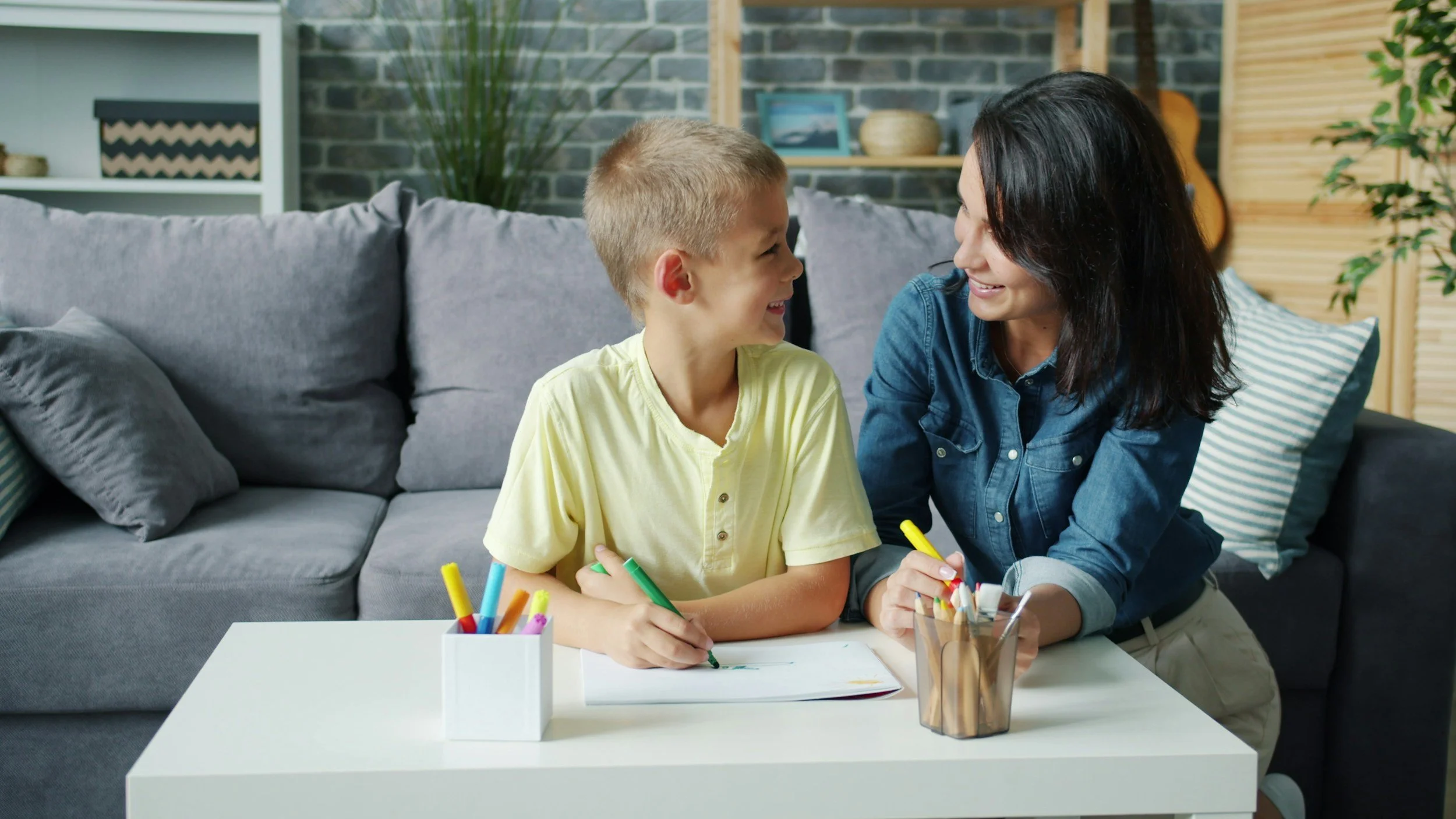
The Process
At Beehive Academy, we believe every child deserves a personalized plan that builds upon their strengths while addressing their unique communication needs. Our speech-language therapy process is designed to help families understand each step from the initial evaluation through successful communication.
01
Assessment and Consultation
02
Results and Treatment Planning
03
Treatment and Progress Monitoring
Step 1: Initial Consultation
We begin by learning about your child and your family's concerns. During this conversation, we discuss developmental history, medical information, educational background, communication challenges, and your goals for therapy.
Step 2: Comprehensive Assessment
Our speech-language pathologist completes a thorough evaluation using standardized assessments, informal observations, play-based interactions, caregiver interviews, and clinical judgment. Depending on your child's needs, the assessment may evaluate:
Speech sound production (articulation and phonology)
Receptive language (understanding)
Expressive language (using words and sentences)
Social communication and pragmatic language
Fluency (stuttering)
Voice and resonance
Oral motor skills
Feeding and swallowing (when appropriate)
Early literacy and phonological awareness
AAC needs and communication supports
Step 3: Review of Results
After the evaluation, we meet with your family to explain the results in clear, easy-to-understand language. We discuss your child's strengths, areas of need, recommendations, and answer any questions you may have.
Step 4: Individualized Treatment Plan
Using the assessment results, we develop a personalized treatment plan with measurable goals that target the skills most important for your child's success. Goals are individualized, functional, evidence-based, and designed to improve communication in everyday environments.
Step 5: Insurance Authorization (When Applicable)
If therapy is covered through insurance, we complete all necessary documentation and obtain authorization before beginning services. We also offer private-pay options and sliding-scale services for families when available.
Step 6: Therapy Begins
Your child begins individualized or small-group therapy sessions designed to be engaging, motivating, and developmentally appropriate. Sessions may include play, movement, literacy activities, games, conversation, technology, AAC, or other evidence-based strategies to promote communication across real-life situations.
Step 7: Family Collaboration
Parents and caregivers are an essential part of the therapy process. We provide education, home practice ideas, strategies, and regular communication so that skills learned during therapy continue to develop at home and in the community.
Step 8: Progress Monitoring
Throughout therapy, we continuously collect data and monitor your child's progress toward each goal. Treatment strategies are adjusted as your child develops new skills to ensure therapy remains effective and meaningful.
Step 9: Re-Evaluation and Goal Updates
At regular intervals, we review progress and update goals based on your child's growth and changing needs. Additional assessments may be completed to measure progress and guide future treatment recommendations.
Step 10: Transition and Graduation
As your child reaches their communication goals, therapy gradually shifts toward independence and generalization of skills across home, school, and community settings. When therapy is no longer medically or educationally necessary, we celebrate your child's accomplishments and provide recommendations to help maintain continued success.


Speech Assessments and Evaluations
Our speech-language pathologists use a combination of standardized assessments, observations, caregiver interviews, developmental checklists, and clinical expertise to develop a complete picture of your child's articulation and speech abilities. Every evaluation is individualized based on your child's age, developmental level, and specific concerns.
Depending on your child's needs, the assessment may evaluate:
Speech Sound Production – articulation, phonological processes, speech intelligibility, and motor speech skills.
Receptive Language – understanding words, directions, questions, concepts, and conversations.
Expressive Language – vocabulary, sentence structure, grammar, storytelling, and the ability to express thoughts and ideas.
Social Communication (Pragmatics) – conversational skills, turn-taking, eye contact, nonverbal communication, perspective-taking, and building friendships.
Early Literacy Skills – phonological awareness, sound awareness, vocabulary, listening comprehension, and other skills that support reading and writing success.
Fluency – identifying stuttering and other fluency disorders and understanding how they affect communication.
Voice and Resonance – evaluating vocal quality, pitch, loudness, and resonance.
Oral Mechanism Examination – assessing the structure and function of the lips, tongue, jaw, palate, and other oral structures involved in speech and feeding.
Feeding and Swallowing – when appropriate, evaluating oral motor skills, chewing, swallowing, and feeding development.
Augmentative and Alternative Communication (AAC) – determining whether a communication device or other supports may improve your child's ability to communicate effectively.
Following the evaluation, our speech-language pathologist reviews the results with your family, explains the findings in easy-to-understand language, and provides recommendations for treatment, home strategies, school supports, and other services when appropriate. Every assessment concludes with a comprehensive written report that includes the evaluation results, diagnosis (when applicable), individualized recommendations, and measurable goals to guide treatment.
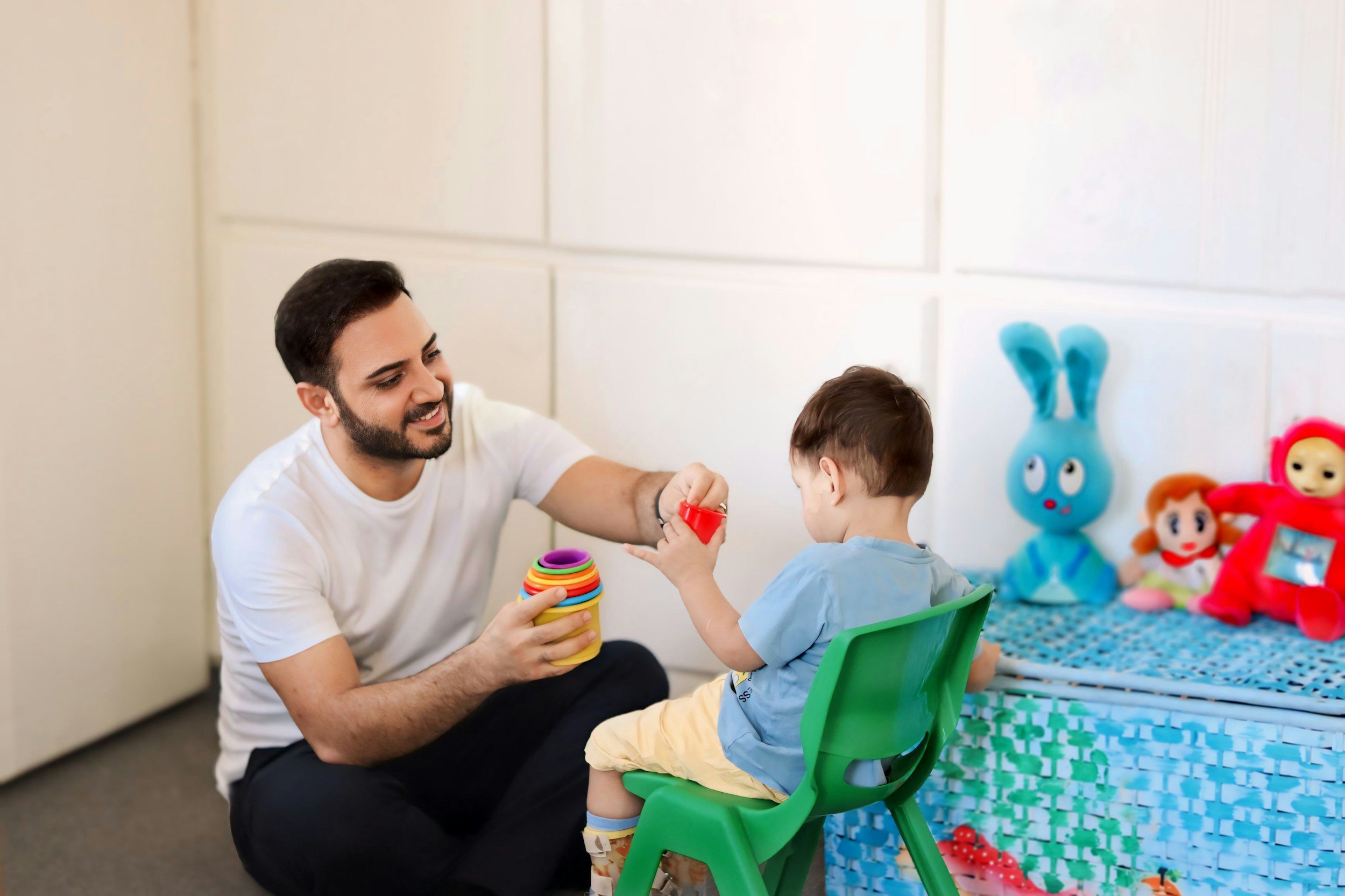

Comprehensive Language Assessments
Language is the foundation for learning, relationships, problem-solving, and everyday communication. A comprehensive language assessment helps determine how your child understands language, expresses ideas, learns new information, and communicates with others. At Beehive Academy, our speech-language pathologists evaluate both the observable communication skills and the underlying language abilities that support academic success and meaningful social interactions.
Every evaluation is individualized to your child's age, developmental level, and concerns. We combine standardized assessments, play-based observations, language sampling, caregiver interviews, developmental checklists, and clinical expertise to develop a complete understanding of your child's language strengths and areas of need.
Our language assessments may evaluate:
Receptive Language – understanding vocabulary, following directions, answering questions, comprehending stories, understanding concepts, and processing spoken language.
Expressive Language – using words, sentences, grammar, vocabulary, storytelling, explaining ideas, asking questions, and participating in conversations.
Pragmatic (Social) Language – initiating conversations, taking turns, understanding nonverbal communication, maintaining topics, interpreting social situations, and developing friendships.
Vocabulary Development – understanding and using age-appropriate words and expanding language across a variety of settings.
Grammar and Sentence Structure – using appropriate verb tenses, pronouns, plurals, sentence organization, and complex language.
Narrative and Conversational Skills – organizing thoughts, sequencing events, retelling stories, and engaging in meaningful conversations.
Listening Comprehension – processing spoken information, remembering verbal directions, answering questions, and understanding classroom instruction.
Language Processing and Higher-Level Language – making inferences, understanding figurative language, solving problems, reasoning, organizing information, and applying language for learning.
Early Literacy Foundations – evaluating phonological awareness, listening skills, vocabulary, and language abilities that support future reading and writing success.
Following the assessment, our speech-language pathologist reviews the results with your family, explains your child's strengths and areas of need, and provides individualized recommendations. Families receive a comprehensive written report that includes assessment results, clinical impressions, recommendations, and measurable treatment goals when therapy is recommended.
At Beehive Academy, we believe language is more than speaking—it is the ability to understand, think, learn, connect with others, and express ideas with confidence. Our goal is to identify how your child communicates best and create a personalized plan that supports success at home, in school, and throughout life.
But that’s not all!
Vocational Programs
Programs for older children are offered on weekends or after school, bringing in local experts to teach lifelong skills needed for jobs, independent living, and adulthood, such as cooking, cleaning, computer science, etc.
Social Groups
Social groups are offered on weekends or after school for a variety of age groups and focus on group, social, and play skills needed to build connections and make friends.
Parent Support and Workshops
Unlike other ABA providers, we do not use a solely 1:1 parent training approach; in addition to individual parent training, we also offer parent support groups and workshops, allowing parents to connect, learn, and build a hive together.
Proven Results
Beehive Academy only employs evidence-based practices. All staff are trained in the practices that have been shown to be successful with your child’s age group and goal domain. Watch your child thrive with measurable improvements in fluency, comprehension, and creativity.
Rapid Response
Our school-based rapid response behavior team ensures that all school-based needs are always met quickly, with a BCBA onsite within 72 hours and assessments completed within 10 days, as well as RBT support, staff coaching, inclusion rescue plans, and outplacement prevention.
Best Practice Standards
Beehive Academy abides by the best practice standards set forth by the governing entities responsible for overseeing ABA, including all ethical, clinical, and operational standards that have been proven to enhance quality of care.