

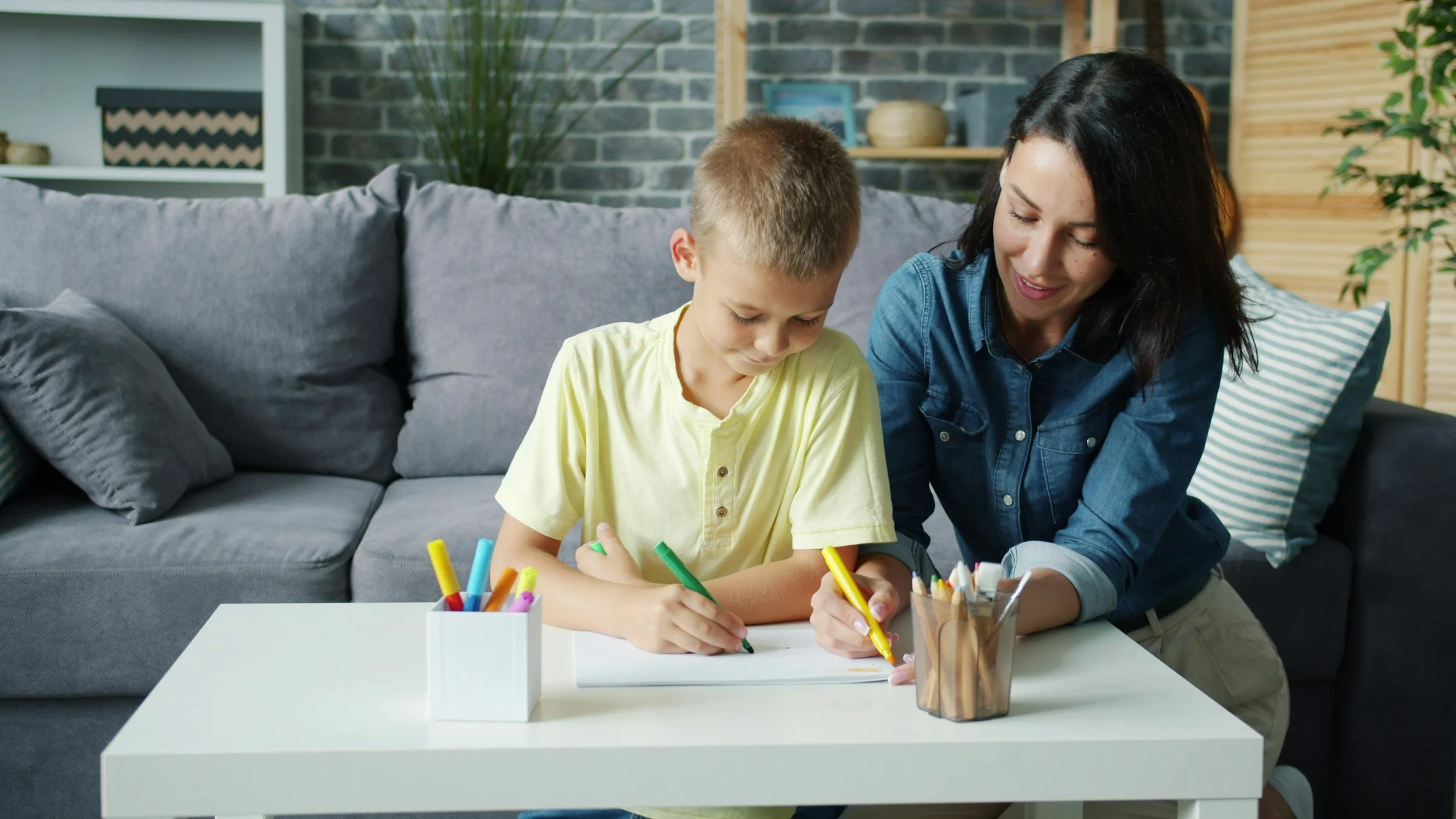
Parent Behavior Success Series
We bring different perspectives to the table, but we’re united by a love for purposeful work, thoughtful design, and real connection.

At Beehive Academy, our Parent Behavior Success Series provides families with practical, research-based strategies that work in real life. This four-week training series teaches parents how to understand why behaviors occur, prevent problems before they begin, and confidently respond to challenging situations using positive, evidence-based approaches.
Whether your child is a toddler testing limits, a school-age child struggling with emotional regulation, or a teenager experiencing behavioral challenges, this course provides practical tools that can be implemented immediately at home.
Designed and taught by behavior specialists with extensive experience supporting children and families, this course focuses on building stronger relationships while creating calmer, happier homes.
The Anxious Generation
Throughout the Beehive Academy Challenging Behavior Parent Success Series, families will use The Anxious Generation by Jonathan Haidt as a companion resource to support weekly discussions and practical application at home. This nationally recognized book explores how excessive screen time, social media, and the decline of real-world play and independence have affected children's emotional well-being, behavior, attention, and development. Each week, course topics will connect key concepts from the book with evidence-based strategies taught by Beehive's Board Certified Behavior Analysts (BCBAs), Speech-Language Pathologists (SLPs), and developmental specialists. Parents will learn how to replace unhealthy habits with practical routines that strengthen communication, emotional regulation, resilience, independence, and positive family relationships. By combining current research with hands-on coaching and individualized support, families will leave the series with a clear plan for creating a healthier, more connected home environment.


Who Should Attend?
This series is designed for parents, grandparents, foster parents, caregivers, and anyone raising children ages 2–18 years.
Perfect for families experiencing:
Frequent tantrums
Defiance and noncompliance
Power struggles
Aggression
Emotional outbursts
Difficulty following directions
Sibling conflicts
Homework battles
Bedtime struggles
Public meltdowns
Screen time conflicts
Transition difficulties
Anxiety-related behaviors
Attention and focus challenges
Everyday parenting frustrations
Series Details
Four-Week Parent Training Series
When: Sundays, 4:00 PM – 6:00 PM
Begins: First Sunday in October
Length: Four consecutive weeks
Format: Small interactive parent workshop with discussion, demonstrations, real-life examples, and take-home strategies.
Week 1 : Understanding Why Children Behave the Way They Do
What You'll Learn
Every behavior serves a purpose. The key to helping children is not simply reacting to what they do, but understanding why they are doing it. While it is important to recognize the factors that contribute to challenging behavior, successful parenting is not about removing every frustration, changing every environment, or preventing every difficult experience. Life is unpredictable, and children must develop the skills to regulate their emotions, communicate appropriately, solve problems, and behave responsibly even when situations are difficult.
During this session, parents will learn how to understand behavior while teaching children to succeed in the real world—not just in carefully controlled environments.
Topics include:
Why Children Behave the Way They Do – Understand the purpose behavior serves and why children continue behaviors that are reinforced.
The Four Common Functions of Challenging Behavior – Learn the primary reasons challenging behaviors occur and how to respond effectively.
How Development Influences Behavior – Discover how communication, language, cognitive development, emotional regulation, and executive functioning shape children's behavior and expectations.
Why Appropriate Consequences Matter – Learn how natural and logical consequences help children develop responsibility, accountability, and sound decision-making.
The Developmental Skills Behind Behavior – Understand how communication, language, sensory processing, emotional regulation, executive functioning, and social skills influence behavior—and how to teach these skills rather than simply reacting to behaviors.
Understanding Triggers Without Trying to Eliminate Them – Learn to recognize situations that increase the likelihood of challenging behavior while understanding that many real-life situations cannot and should not be avoided. Instead of trying to create a perfect world for children, parents will learn how to teach children to regulate their behavior, tolerate frustration, and respond appropriately across different environments.
Teaching Appropriate Communication – Learn to identify what your child may be communicating through behavior while also teaching socially appropriate ways to express needs, wants, frustrations, and emotions.
The ABCs of Behavior (Antecedent, Behavior, Consequence) – One of the oldest and most effective behavior analysis tools for understanding why behaviors occur and how everyday interactions influence future behavior.
Setting Developmentally Appropriate Expectations – Learn what behaviors are realistic at different developmental ages while maintaining expectations that prepare children to succeed at home, school, and in the community.
Building Strong Parent-Child Relationships – Develop relationships built on trust, consistency, clear expectations, and mutual respect while helping children become increasingly independent and responsible.
By the end of this session, parents will understand behavior from an entirely new perspective. Rather than trying to remove every obstacle from their child's life, they will learn how to teach the lifelong skills of emotional regulation, flexibility, communication, responsibility, and socially appropriate behavior so their children can successfully navigate the challenges they will inevitably encounter throughout life.
What You’ll Learn
Some challenging behaviors can be reduced through thoughtful routines, clear expectations, and supportive environments. However, life cannot always be arranged to prevent frustration, disappointment, waiting, change, noise, demands, or other triggers. Children must learn how to regulate their emotions and behavior even when the environment is uncomfortable, unpredictable, or not designed around their preferences.
This session teaches parents how to use prevention appropriately without removing typical challenges or avoiding triggers. The goal is not to create a world in which children never become upset or live in a bubble with a perfectly crafted environoment. The goal is to prepare children to manage difficult situations, tolerate limits, respond appropriately, and recover when things do not go their way.
Parents will learn how to:
Create routines and structure that support success while still teaching flexibility.
Use visual schedules to clarify expectations and build personal accountability.
Give clear directions and follow through without creating unnecessary power struggles.
Prepare children for transitions while teaching them to tolerate unexpected changes.
Build independence, responsibility, persistence, and appropriate problem-solving.
Teach children what socially appropriate behavior looks like at home, at school, and in the community.
Help children understand the shared social expectations that allow families, classrooms, workplaces, and communities to function safely and respectfully.
Teach emotional regulation and coping skills that can be used in environments parents cannot control.
Encourage cooperation, respect for others, and responsible participation in the community.
Set appropriate limits without arranging the entire environment around the child’s behavior.
Parents will also examine the careful use of reinforcement. Reinforcement can be valuable when teaching a new skill, but it can be overused. When children receive a reward for every expected behavior, they may begin to act only when an external reward is available. This can interfere with the development of internal motivation, personal responsibility, self-discipline, and an understanding of why appropriate behavior matters.
The long-term goal is to gradually move children from external reinforcement toward internal regulation. Children must learn to make appropriate choices because those choices are safe, respectful, responsible, and necessary for living successfully with other people—not only because they will receive a prize, token, or preferred item.
By the end of this session, parents will understand how to balance prevention with real-world preparation. Families will learn to support children without shielding them from every difficulty and to teach the regulation, flexibility, accountability, and socially appropriate behavior needed to become responsible members of their families and communities.
Week 2 : Preventing Challenging Behaviors
What You'll Learn
Every parent experiences moments when their child is angry, frustrated, overwhelmed, or refuses to cooperate. The goal is not to stop children from experiencing these emotions—it is to teach them how to respond to those emotions in socially appropriate ways. During difficult moments, parents have an opportunity to coach emotional regulation, reinforce responsibility, and help children develop the skills they will need throughout life.
This session provides practical, evidence-based strategies for responding calmly, consistently, and effectively while helping children learn accountability, resilience, and self-control.
Topics include:
Responding to Tantrums – Learn how to remain calm, maintain expectations, and teach children that emotions are acceptable, but inappropriate behaviors are not.
Managing Aggression Safely – Protect everyone involved while teaching safe, socially appropriate alternatives for expressing frustration and anger.
Responding to Refusal and Noncompliance – Learn strategies that reduce power struggles while maintaining clear expectations and helping children understand that responsibilities do not disappear simply because a task is difficult or unpleasant.
De-escalating Emotional Outbursts – Help children return to a regulated state without reinforcing behaviors that allow them to avoid expectations or gain inappropriate control of the situation.
Teaching Emotional Regulation – Coach children to recognize their emotions, tolerate discomfort, and choose appropriate behaviors even when they are upset, frustrated, disappointed, or anxious.
Teaching Healthy Coping Skills – Build practical strategies children can use across home, school, and community settings, recognizing that parents cannot remove every challenge or stressful situation from their child's life.
Responding Without Escalating Behavior – Learn how your own words, reactions, and emotions influence behavior and how calm, consistent responses create better long-term outcomes.
Using Effective Consequences – Apply consequences that teach responsibility, accountability, and learning rather than punishment or emotional reactions.
Natural and Logical Consequences – Help children understand the connection between their choices and the real-world outcomes that naturally follow those choices.
Positive Discipline That Builds Character – Use discipline to teach self-control, responsibility, perseverance, empathy, and respect instead of relying solely on rewards or punishment.
Helping Children Recover After Difficult Moments – Teach children how to reflect on what happened, repair relationships when necessary, solve problems, and make better choices the next time.
Maintaining Consistency Between Caregivers – Create predictable expectations and responses so children receive the same message from all adults involved in their lives.
Throughout this session, parents will practice exactly what to say, how to respond, and when to step in during common everyday situations. Rather than focusing on making the moment easier, parents will learn how to use difficult moments as opportunities to teach emotional regulation, resilience, responsibility, and socially appropriate behavior that will serve their children throughout their lives.
Week 3 : Responding to Challenging Behaviors with Confidence
What You'll Learn
The ultimate goal of parenting is not simply to reduce challenging behaviors—it is to raise children who become responsible, emotionally healthy, independent, resilience and productive adults. Success is measured not by whether children never struggle, but by whether they develop the skills to overcome challenges, make responsible decisions, regulate their emotions, and contribute positively to their families and communities.
Throughout this course, parents have learned that the world cannot be changed to eliminate every frustration, disappointment, or obstacle. Instead, children must be taught how to navigate those challenges with confidence, resilience, accountability, and respect for others. This final session brings those principles together into a practical, long-term parenting plan.
Parents will learn how to:
Build Independence – Teach children to complete everyday responsibilities, solve problems, and become increasingly self-sufficient.
Develop Personal Responsibility – Help children understand that their choices have consequences and that taking ownership of their actions is essential for lifelong success.
Strengthen Emotional Self-Regulation – Continue building the skills needed to manage emotions, tolerate frustration, delay gratification, and make thoughtful decisions under stress.
Develop Flexible Problem-Solving Skills – Teach children how to think through challenges, adapt to change, and find appropriate solutions instead of avoiding difficult situations.
Improve Communication – Strengthen respectful communication, conflict resolution, and self-advocacy while teaching children to express themselves appropriately across different environments.
Build Strong Family Relationships – Create a home culture based on trust, consistency, accountability, encouragement, and mutual respect.
Develop Resilience – Help children learn that setbacks, mistakes, disappointment, and failure are normal parts of life and valuable opportunities for growth and learning.
Reduce Stress Within the Home – Create routines, expectations, and family systems that support cooperation while promoting responsibility rather than dependence.
Create a Family Behavior Success Plan – Develop practical strategies that teach new skills instead of simply reacting to unwanted behavior.
Partner Successfully with Schools and Community Programs – Learn how to promote consistent expectations across home, school, extracurricular activities, and other community settings.
Generalize Skills Across Real-Life Environments – Help children demonstrate responsibility, emotional regulation, cooperation, and socially appropriate behavior wherever they go—not just at home.
Maintain Progress for the Long Term – Build lasting habits that continue long after the course ends by gradually shifting from external prompts and rewards toward internal motivation, personal responsibility, and self-discipline.
The course concludes with coaching, opportunities to discuss unique family challenges, and the development of an action plan that parents can immediately begin using at home. Families leave with practical tools, greater confidence, and a clear understanding that successful parenting is not about creating a perfect world for children—it is about preparing children to succeed in the real one. By teaching resilience, responsibility, respect, emotional regulation, and socially appropriate behavior, parents equip their children with the skills needed to become capable, compassionate, and productive members of their families, schools, workplaces, and communities.
Week 4 : Creating Lasting Change at Home
What Makes Beehive Academy Different?
At Beehive Academy, our parent education is grounded in decades of research in child development, behavior science, language development, and education. We don't believe in one-size-fits-all parenting advice or quick fixes. Instead, we help parents understand the why behind behavior and provide practical, compassionate strategies that strengthen relationships while building lifelong skills.
Our goal isn't simply to reduce challenging behaviors—it's to help children develop communication, emotional regulation, independence, confidence, and the skills they need to succeed at home, at school, and in life.
Parents should: The Anxious Generation by Jonathan Haidt
This book argues that the widespread adoption of smartphones and social media fundamentally changed childhood beginning around 2010–2012 and contributed to sharp increases in anxiety, depression, loneliness, self-harm, and reduced independence among children and adolescents. Haidt also proposes practical solutions, including:
Delaying smartphones until high school.
Delaying social media until at least age 16.
Phone-free schools.
Encouraging far more independent play and real-world social experiences
Other excellent recent books on the same topic include:
The Amazing Generation – Written for children ages 9–12, this companion book teaches kids how to live a fulfilling life without being controlled by smartphones and social media.
How to Break Up with Your Phone – Focuses on helping adults reduce unhealthy phone use and build healthier habits.
Stolen Focus – Explores how modern technology, social media, and digital distractions affect attention, learning, and mental health.
Glow Kids – Examines concerns about excessive screen exposure and child development from a clinical perspective.
One important point is that while The Anxious Generation has been enormously influential, it has also generated scientific debate. Many researchers agree that smartphones and social media are associated with important risks for some young people, but they differ on how large the causal effect is and whether technology is the primary driver of the youth mental health crisis. Other experts emphasize additional contributors such as reduced free play, academic pressure, family stress, sleep disruption, and broader societal changes.
For educators and parents, The Anxious Generation is probably the single most impactful recent book on this subject and is an excellent starting point.

Because every child can learn, every behavior has a reason, and every parent deserves the knowledge and confidence to help their child thrive.

You'll Leave With
Practical strategies you can use immediately
Easy-to-follow handouts and resources
Confidence in handling difficult behaviors
A better understanding of your child's development
Tools to prevent problems before they occur
Greater consistency and less stress at home
A personalized plan to support your child's success