

Beehive Piano & Music Academy
Building Musical Skills, Confidence, and a Lifelong Love of Learning
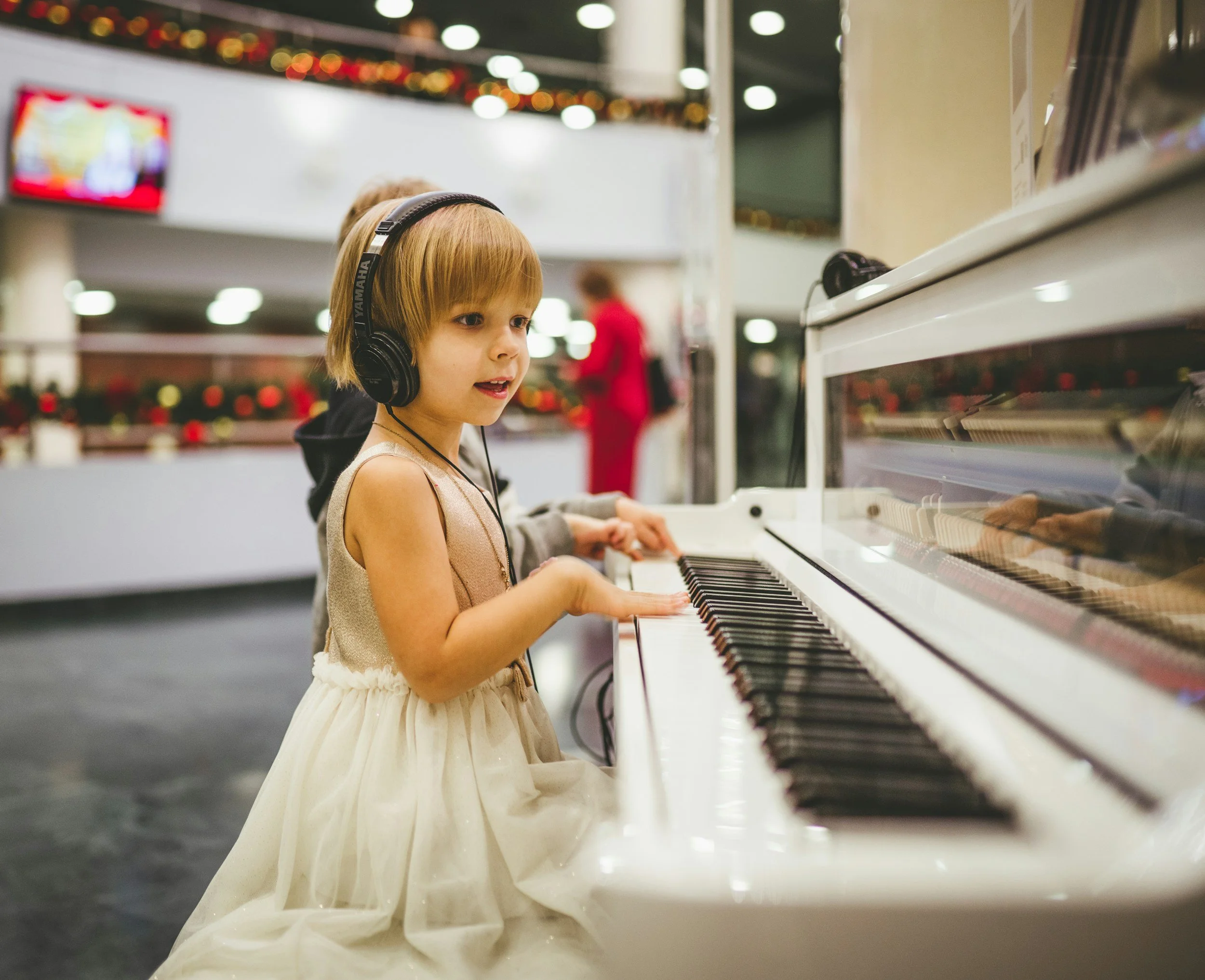
At Beehive Piano & Music Academy, children do more than learn how to play songs. Our developmental music program uses piano, rhythm, movement, listening activities, and interactive music instruction to strengthen the foundational skills children need for school, communication, creativity, and everyday learning.
Our classes are designed specifically for young and beginning musicians. Children learn through engaging, age-appropriate activities that make music understandable, enjoyable, and meaningful.
At Beehive Academy, music is the teaching tool—but whole-child development is the goal.
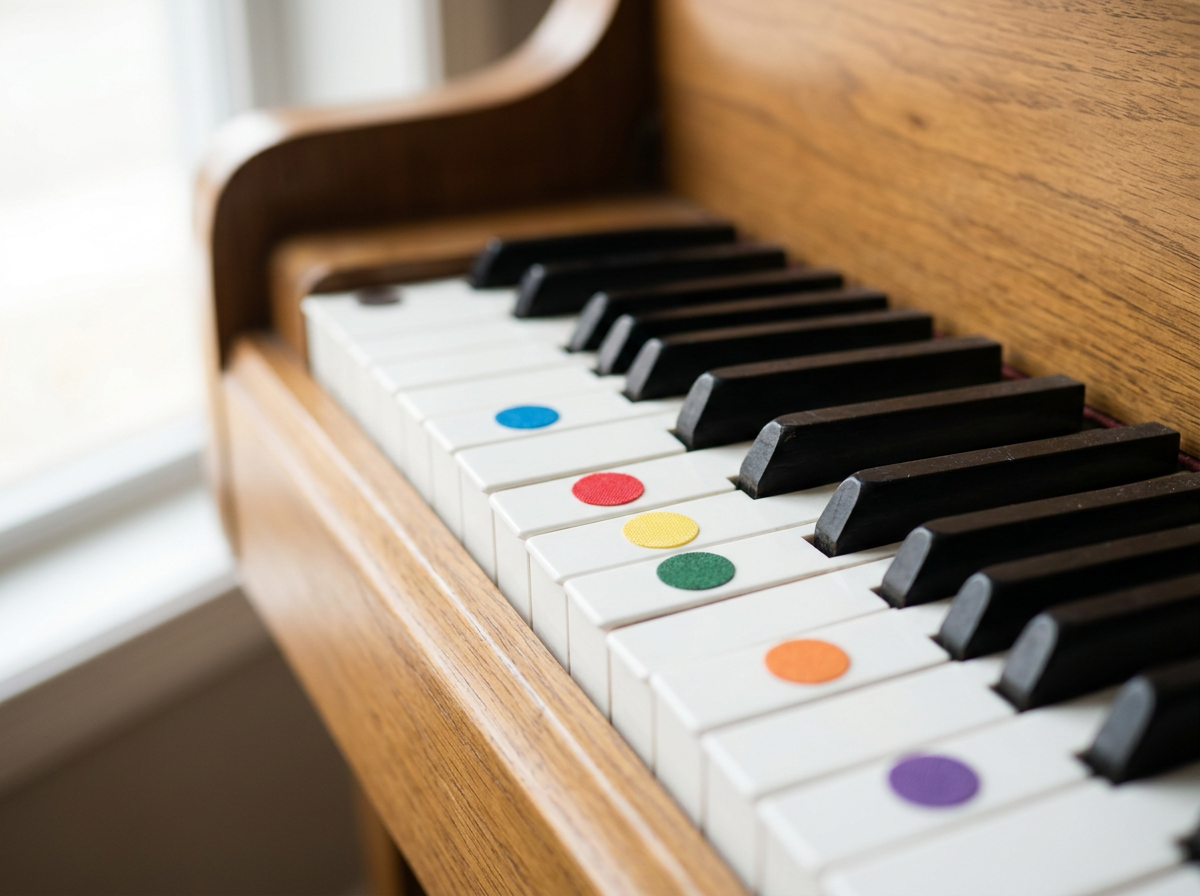
Color-Based Piano Lessons for Preschoolers
Traditional piano instruction can feel overwhelming for preschool-aged children who are still developing letter recognition, visual tracking, attention, and fine motor coordination. Our preschool piano program introduces musical concepts through a developmentally appropriate color-based learning system.
Children learn to associate colors with specific piano keys, notes, patterns, and musical directions. This allows young learners to begin playing recognizable songs while gradually building the skills needed to understand traditional music notation.
Color-based instruction helps preschoolers:
Identify and locate keys on the piano
Match colors, symbols, and visual patterns
Follow simple musical sequences
Develop one-to-one correspondence
Strengthen visual attention and visual tracking
Learn left-to-right progression
Improve finger isolation and hand control
Practice listening and following directions
Build confidence through early musical success
Transition gradually from color cues to traditional notes
As children progress, color supports are systematically reduced and traditional note names, musical symbols, and staff reading are introduced.
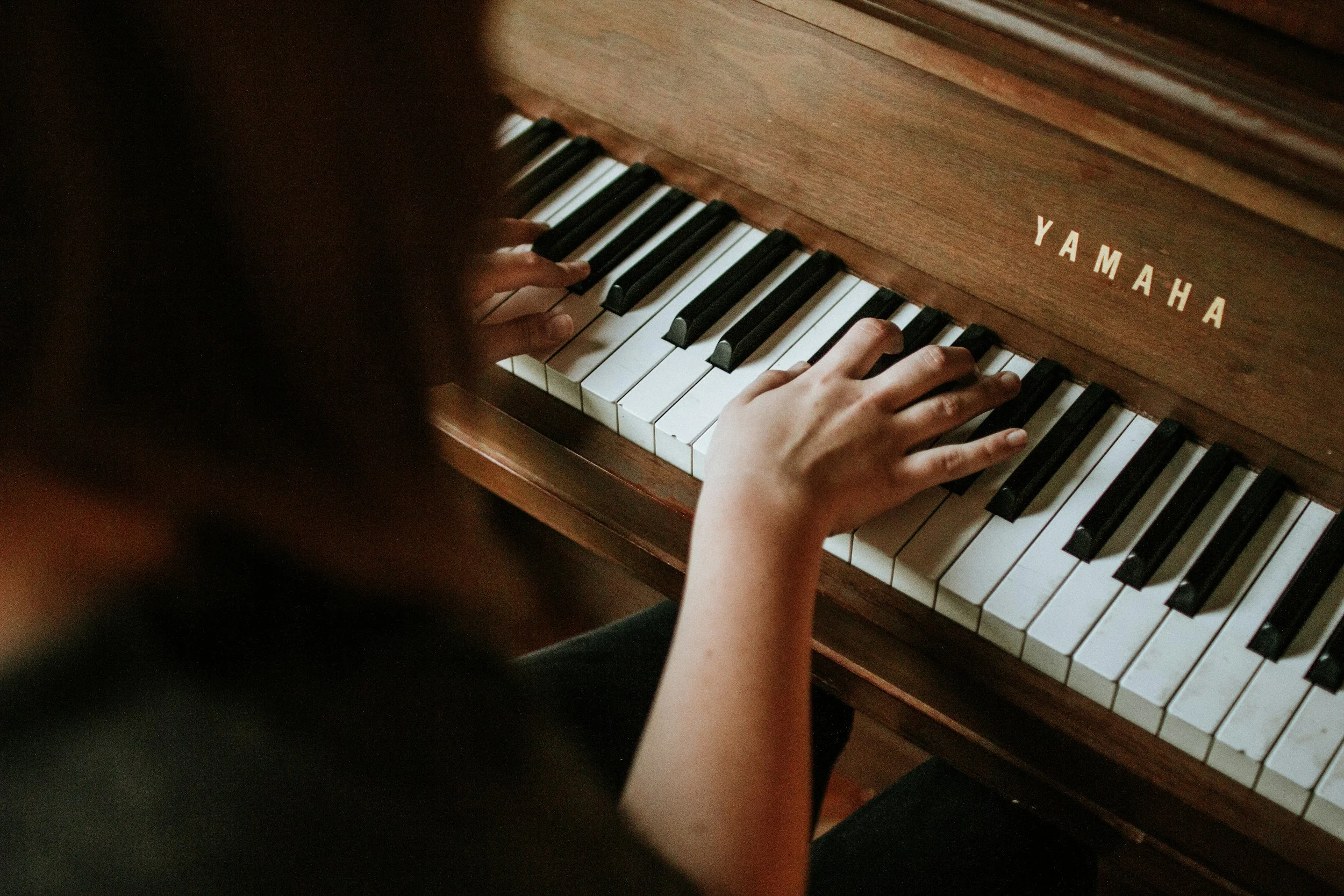
Beginner Piano and Music Lessons
Our beginner program teaches children how music works—not simply how to memorize a song.
Students receive structured instruction in piano technique, music reading, rhythm, ear training, musical expression, and performance readiness. Lessons include direct instruction, guided practice, musical games, movement, repetition, and opportunities for children to independently apply what they have learned.
Children learn at a pace that supports both skill mastery and confidence.
Beginning Piano Skills
Students learn how to:
Sit with appropriate posture at the piano
Position their hands and fingers correctly
Identify groups of two and three black keys
Locate middle C and other foundational notes
Recognize high and low sounds
Use individual fingers with increasing control
Play simple melodies and patterns
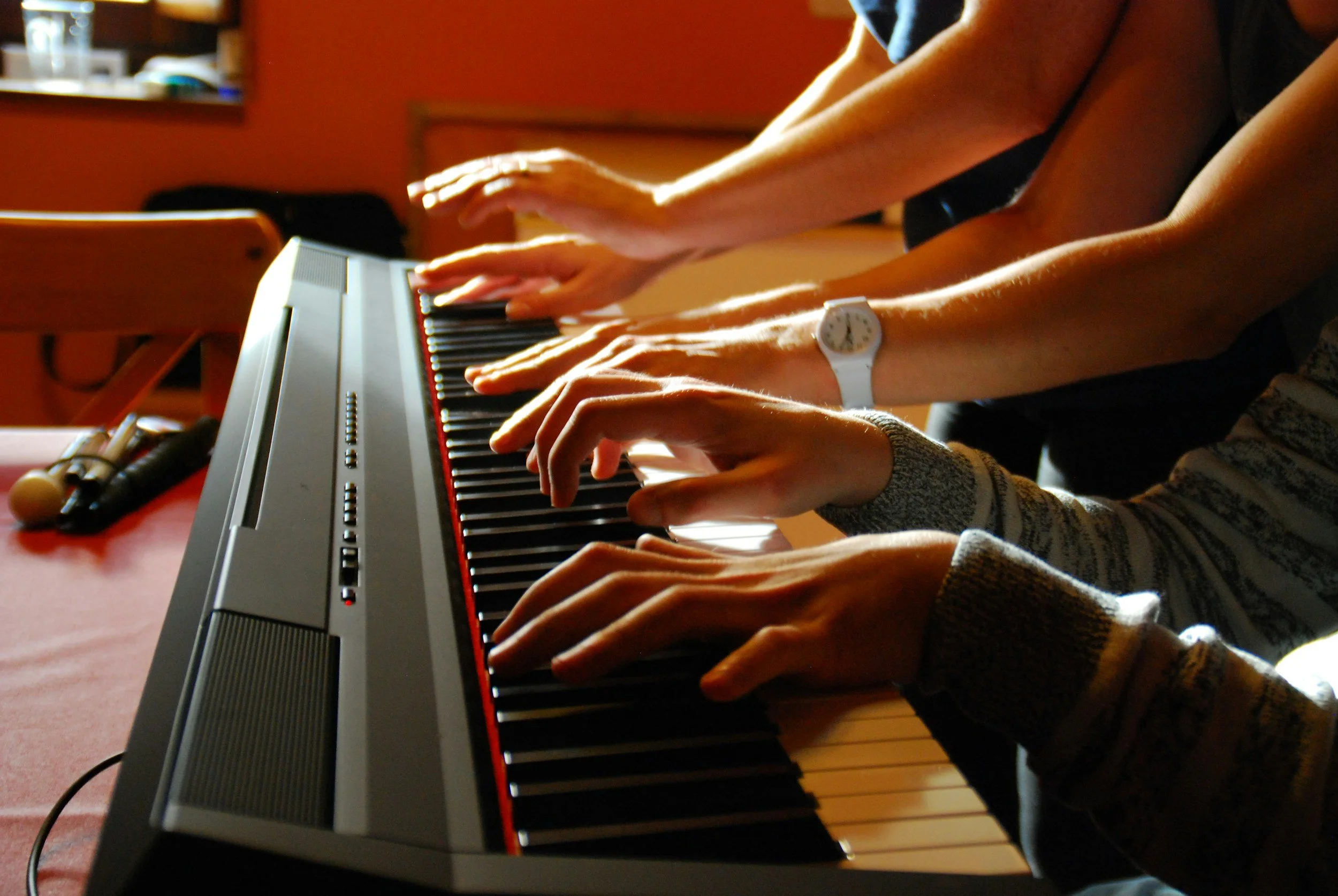
Coordinate both hands
Follow basic fingering directions
Control the volume and quality of sound
Begin using the piano pedals when developmentally appropriate
Practice short musical selections independently
Perform songs from beginning to end
More than Playing Keys
-
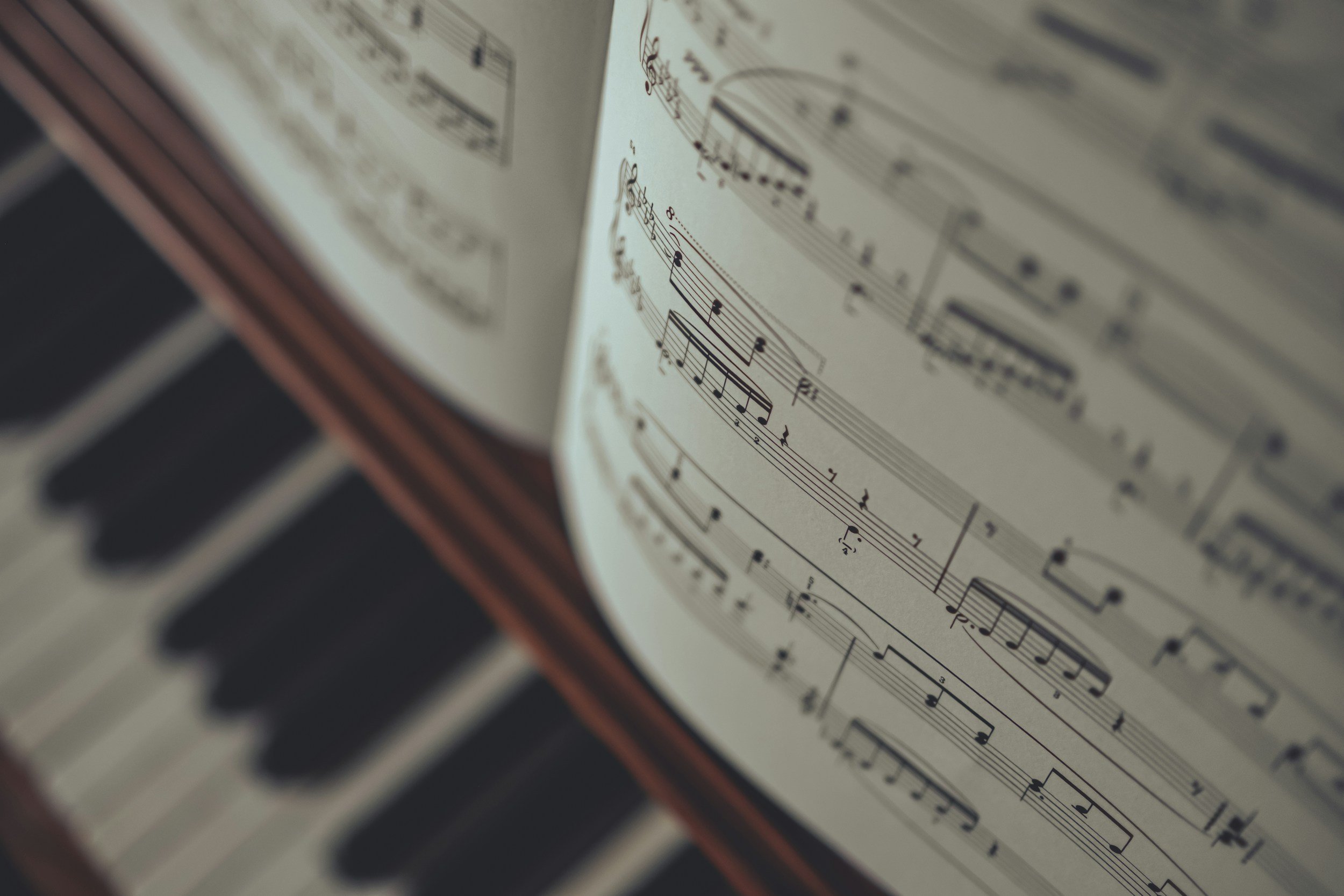
Music reading combines visual attention, memory, sequencing, pattern recognition, and motor planning. Our students are carefully introduced to the symbols and structure of written music.
Instruction may include:
Identifying the musical staff
Learning treble and bass clefs
Recognizing line and space notes
Connecting written notes to piano keys
Understanding note direction
Reading notes from left to right
Recognizing repeated notes and musical patterns
Identifying steps, skips, and intervals
Following finger numbers
Reading simple melodies
Understanding measures and bar lines
Recognizing repeat signs
Following musical directions
Developing sight-reading skills
Transitioning from supported practice to independent music reading
Children are not expected to memorize everything at once. Skills are introduced gradually and practiced through repetition, games, movement, and meaningful musical experiences.
-
Rhythm is an essential part of music and supports children’s ability to listen, organize information, recognize patterns, and coordinate their movements.
Students learn to:
Maintain a steady beat
Clap, tap, march, or play along with a rhythm
Recognize long and short sounds
Identify whole, half, quarter, and eighth notes
Understand basic rests
Count simple rhythmic patterns
Match movement to music
Start and stop with a musical cue
Play with a teacher or group
Follow changes in speed
Recognize repeated rhythmic patterns
Coordinate rhythm with piano playing
Develop timing and pacing
Practice waiting for their musical turn
Rhythm activities may include percussion instruments, movement games, clapping exercises, call-and-response activities, and piano practice.
-
Music instruction helps children learn to listen carefully and respond to differences in sound.
Our listening activities may target:
Recognizing high and low sounds
Identifying loud and soft music
Distinguishing fast and slow tempos
Recognizing same and different sound patterns
Remembering short musical sequences
Copying rhythms and melodies
Identifying changes in pitch
Listening for the beginning and ending of a song
Following auditory directions
Recognizing instruments by sound
Developing musical memory
Responding to verbal and musical cues
Improving attention to relevant sounds
These skills support musical development while also strengthening the listening abilities children use during conversations, classroom instruction, and group activities.
Supporting Cognitive Development Through Music
Learning piano requires children to use many skills at the same time. They must look at visual information, listen to instructions, remember a sequence, coordinate their fingers, control their movements, and monitor whether the sound matches the intended result.
Our music curriculum is designed to support:
Attention and Concentration
Children practice attending to a teacher, musical selection, visual cue, or sequence for increasing periods of time.Sequencing
Music teaches children that sounds and actions occur in a specific order. Students learn to begin at the correct place and continue through a sequence without skipping steps.Problem-Solving
Students learn to notice when something does not sound correct, identify the problem, and try a new strategy.Processing Speed
With practice, students become more efficient at connecting visual notes, verbal directions, and motor responses.Working Memory
Students remember notes, finger numbers, rhythmic patterns, directions, and short musical sequences while playing.Pattern Recognition
Children identify repeating notes, rhythms, visual patterns, and melodic structures.Cognitive Flexibility
Children practice changing tempo, volume, fingering, rhythm, or musical direction based on new information.Memory and Recall
Repetition, musical patterns, and meaningful songs help children practice retaining and recalling information.Our Developmental Enrichment Program
-
![ABA Therapy]()
Fine Motor and Visual-Motor Development
Piano instruction provides repeated opportunities to develop precise hand and finger movements.
Lessons may help children practice:
Finger isolation
Hand strength
Bilateral coordination
Crossing the midline
Wrist stability
Graded pressure
Hand-eye coordination
Visual-motor integration
Motor planning
Independent movement of each hand
Coordinating different actions with both hands
Controlling the force used to press a key
Moving smoothly across the keyboard
Young learners are supported through short practice periods, visual cues, modeling, and activities that match their developmental abilities.
-
![ABA Therapy]()
Language and Communication Development
Music creates natural opportunities for children to develop receptive and expressive language.
During lessons, children practice:
Following one-step and multi-step directions
Understanding positional concepts such as up, down, left, and right
Learning descriptive words
Answering questions about music
Requesting help or clarification
Labeling instruments, notes, and musical symbols
Describing what they hear
Comparing sounds and patterns
Participating in call-and-response activities
Taking conversational turns
Using complete thoughts to explain musical choices
Listening while another person is speaking or playing
Songs may also be used to support vocabulary, sound awareness, rhyming, syllable awareness, and early literacy concepts.
-
![ABA Therapy]()
Early Literacy and Math Connections
Music naturally includes patterns, symbols, counting, timing, and left-to-right visual tracking.
Our piano and music activities may support:
Symbol recognition
Letter and note-name recognition
Left-to-right progression
Visual scanning
Rhyming
Syllable awareness
Sound discrimination
Counting
One-to-one correspondence
Number recognition
Comparing quantities
Recognizing patterns
Understanding fractions through note values
Grouping beats into measures
Understanding order and sequence
Identifying similarities and differences
These concepts are taught through musical experiences rather than worksheets alone.
-
![ABA Therapy]()
Social and Emotional Development
Learning music can help children develop patience, persistence, flexibility, and confidence.
Students practice:
Waiting for a turn
Listening while another student plays
Participating in group activities
Accepting feedback
Asking for help
Recovering from mistakes
Trying again when a task is difficult
Celebrating the success of others
Performing in front of a small group
Managing nervousness
Expressing emotions through music
Making appropriate musical choices
Cooperating with teachers and peers
Developing pride in completed work
We teach children that mistakes are a normal and important part of learning.
-
![ABA Therapy]()
Creativity and Musical Expression
Music instruction should not be limited to copying what a teacher demonstrates. Children also need opportunities to explore, create, and make musical decisions.
Students may participate in:
Creating original melodies
Making rhythmic patterns
Choosing sounds to represent emotions
Improvising on the piano
Creating musical stories
Selecting tempo and dynamics
Adding sound effects to stories
Composing short songs
Playing musical question-and-answer games
Exploring different instruments
Moving creatively to music
Performing songs in their own expressive style
These activities support imagination, flexible thinking, self-expression, and confidence.
-
![ABA Therapy]()
Executive Functioning Through Piano Instruction
Piano lessons provide a meaningful way for children to practice executive functioning skills.
Students learn to:
Prepare materials before beginning
Follow a lesson routine
Attend to multiple pieces of information
Remember directions
Start a task after receiving an instruction
Continue working even when a task is challenging
Check their own performance
Slow down and correct errors
Organize music materials
Transition between activities
Complete a musical task
Practice independently
Set small goals
Reflect on progress
These are the same types of skills children use during classroom assignments, homework, sports, social activities, and daily routines.
Our Developmental Approach to Music
Beehive Academy follows a structured learning progression to ensure that children do more than briefly demonstrate a skill.
01 Acquisition
The child is introduced to a new musical skill with teaching, modeling, and support.
03 Generalization
The child uses the skill with different songs, teachers, instruments, settings, or materials.
The child practices the skill until it becomes more accurate, smooth, and confident.
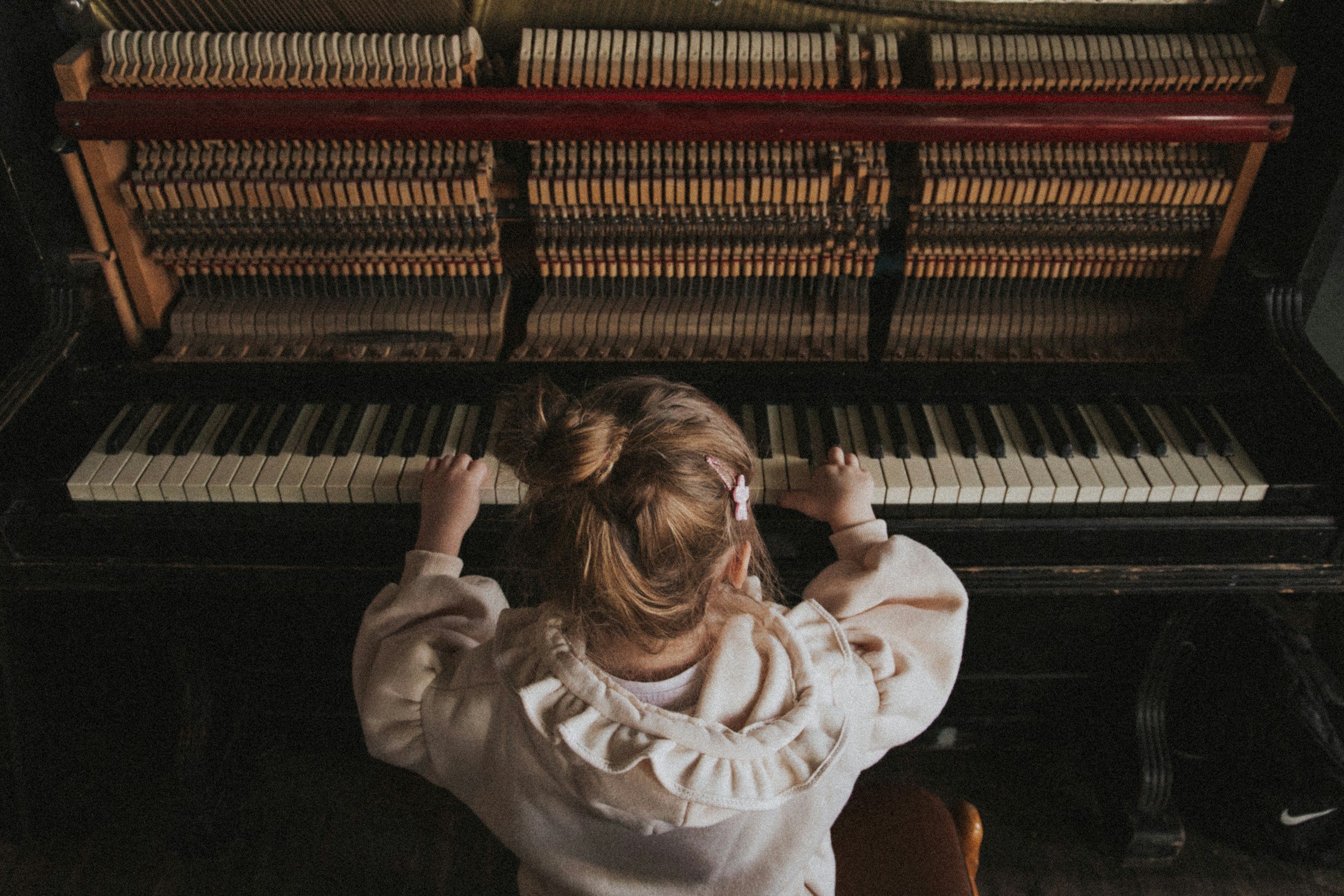
02 Accuracy and Fluency
04 Application
The child independently combines and applies skills during performances, creative activities, and new musical experiences.
Group and Individual Learning Opportunities
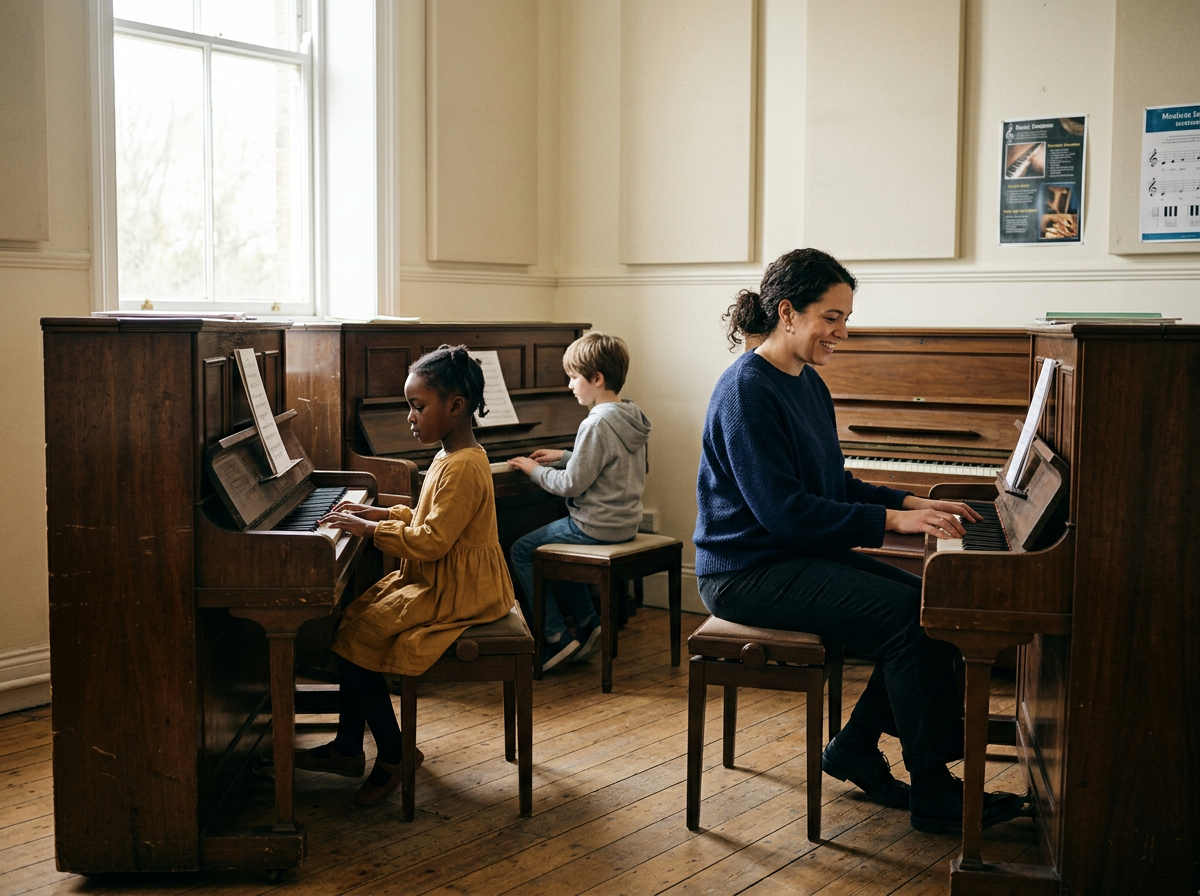
Group Instruction
Beehive Academy offers small-group piano lessons designed to provide each child with individualized instruction while fostering the fun and motivation of learning alongside peers. Students participate in engaging classroom-style lessons that encourage collaboration, confidence, and musical growth. Every child has their own piano for the entire lesson—no sharing required—allowing for maximum hands-on practice, personalized feedback, and continuous skill development.
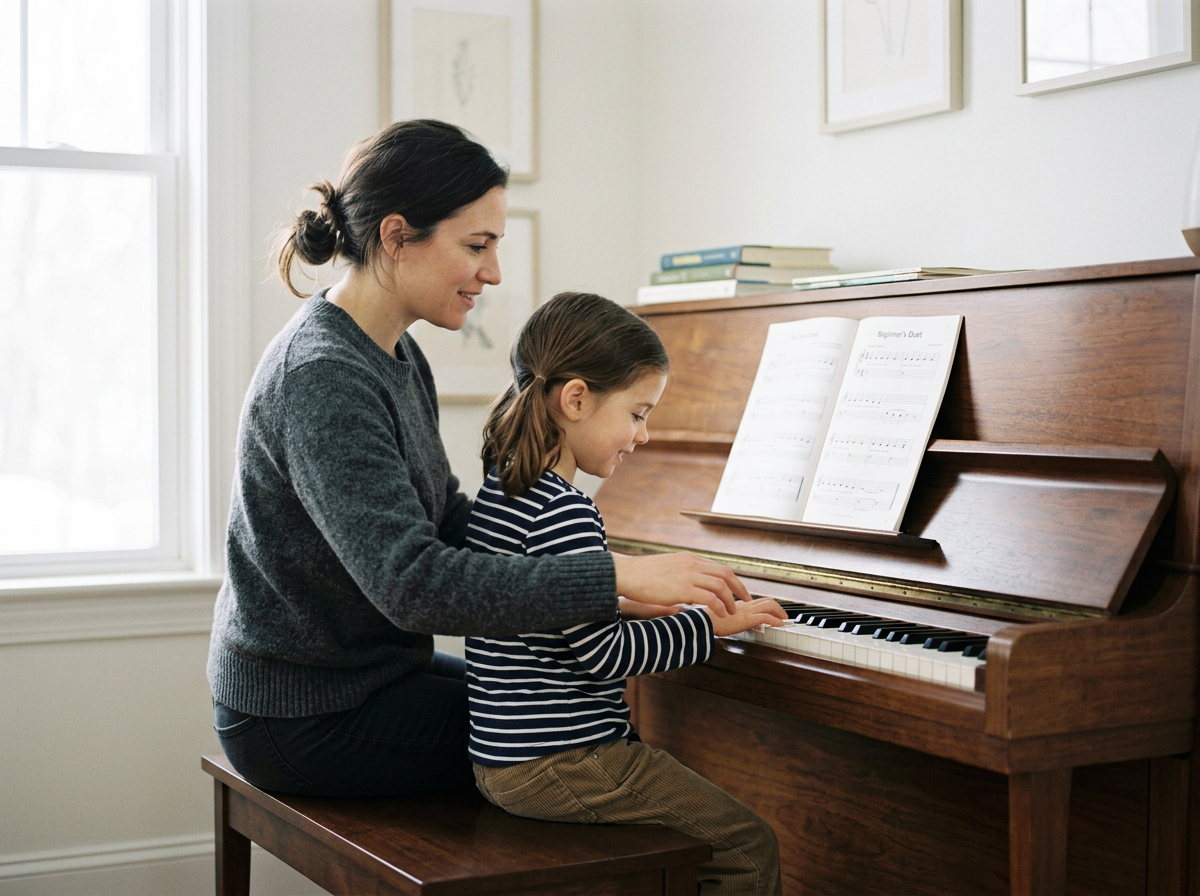
Individual and Private Lessons
Beehive Academy offers individualized one-on-one lessons tailored to each child's unique strengths, interests, and areas for growth. These personalized sessions provide focused instruction, allowing teachers to target specific skills, accelerate progress, build confidence, and help each student reach their fullest potential at their own pace.
Cost of Tuition for 12 Weeks
Once per week- 1 hour per week for entire 12 Weeks Cost $199
Twice per week 2 hours per week for entire 12 Weeks Cost $399
Three times per week 3 hours per week for entire 12 Weeks Cost $599
Four times per week 4 hours per week for entire 12 Weeks Cost $799
Five times per week 5 hours per week for entire 12 Weeks Cost $999
Children must select consistent days and times for the full 12-week session so that their enrollment space is reserved. Families may choose different session times on different days, but the selected weekly schedule must remain consistent throughout the semester. When a child misses a scheduled class, a make-up session may be available during another class that week, provided there is space in the appropriate level.