

Free with No Insurance Required
Performed by Our Team of SLPs, BCBAs, Master Level Teachers and Certified Teachers
Free Developmental and Academic Screening Event!
When You Have a Concern, You Deserve Answers
Parents know their children better than anyone. Sometimes, however, a parent may notice that something does not seem quite right without knowing whether what they are seeing is part of typical development or a sign that their child may need additional support.
A child may be difficult to understand. They may struggle to follow directions, learn new words, remember what they read, understand math concepts, pay attention, manage frustration, hold a pencil, coordinate movements, or respond consistently when someone speaks to them.
Parents may wonder: “Should I be concerned, or is this developmentally appropriate?”
Unfortunately, getting that question answered is not always easy. Families may encounter long waitlists, limited numbers of specialists, insurance restrictions, referral requirements, or simply may not know which professional they need to see first.
That is why Beehive Academy is hosting a Free Screening Event (No Insurance Required) offering families access to screenings in multiple areas of child development and learning.

Screening Areas
-
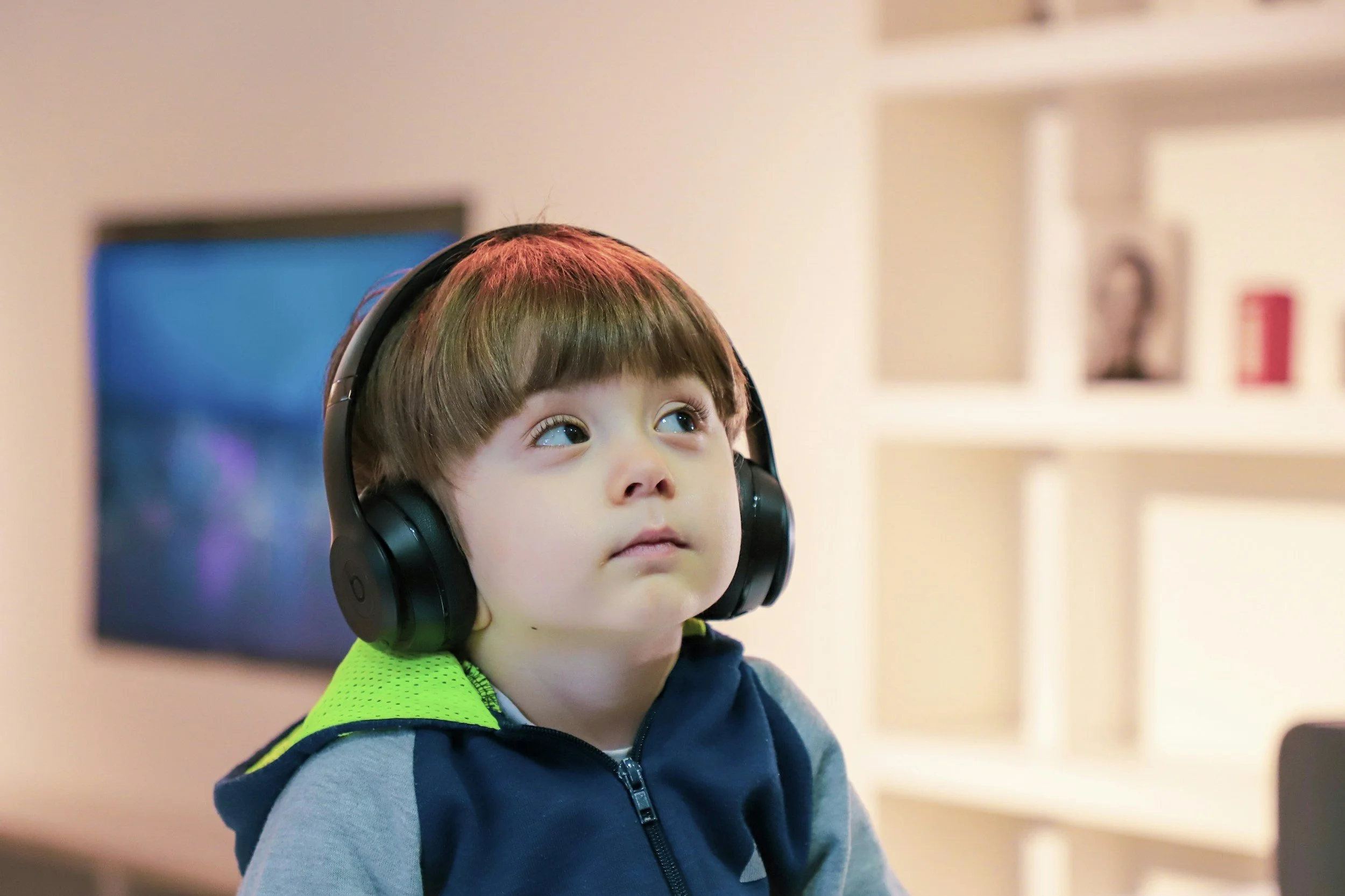
Hearing Screening
Our SLP will perform basic hearing screenings for ages 3-99.
-

Speech
Our SLPs will perform speech screenings.
-

Language Screenings
Our SLP will perform a screening for language both receptive and expressive.
-

Academic Screenings
Our team provides reading, and math screenings.
-

Behavioral Screenings
Our team of BCBAs will perform behavioral screenings.
-

Fine and Gross Motor
Our BCBAs and OTs will perform fine and gross motor screenings.
Why Is this Important?

Speech and Language Screening
Access to speech-language services has been a longstanding concern in the United States. In the peer-reviewed article Addressing the Shortage of Speech-Language Pathologists in School Settings, Katie Squires documented a nationwide shortage of qualified speech-language pathologists and warned that when schools cannot employ enough qualified professionals, “the students' needs either go unmet, or students are served by untrained persons.”
For families, limited access can mean waiting months for an appointment or deciding not to pursue an evaluation because the process seems overwhelming.
But a parent should not have to wonder for months whether a child's speech or language development is appropriate.
Our screening event provides families with an opportunity to have concerns related to speech and language looked at by trained professionals. Depending on the child's needs, screening may examine areas such as speech-sound development and intelligibility, vocabulary, following directions, understanding language, putting words and sentences together, answering questions, and communicating thoughts and ideas.
Parents leave with a better understanding of whether their child's skills appear developmentally appropriate or whether additional evaluation should be considered.
Hearing Screening
Sometimes what appears to be a speech, language, attention, or academic problem can be influenced by a child's ability to hear.
According to the Centers for Disease Control and Prevention, approximately 1 to 3 out of every 1,000 children have hearing loss, while other studies have found rates of approximately 2 to 5 per 1,000 children.
A child does not necessarily have to have profound hearing loss for hearing difficulties to affect communication and learning. If a parent has concerns about how consistently a child responds to sound or speech, our event provides an opportunity to receive an initial hearing screening without first having to arrange a separate specialist appointment.
Children who do not pass a screening can then be referred for appropriate follow-up with an audiologist or other qualified medical professional.
Reading and Math Screening
Academic screening has become increasingly important.
New national research released in 2026 by researchers at Stanford, Harvard, and Dartmouth describes a decade-long “learning recession.” Looking at district-level achievement across much of the country, researchers found that compared with a decade earlier, reading scores were lower in 83% of school districts for which data were available and math scores were lower in 70%.
Reading habits have also changed dramatically. In the national NAEP student survey, only 14% of 13-year-olds reported reading for fun almost every day in 2023, compared with 27% in 2012.
These numbers do not mean that every struggling student has a learning disability. They do mean that parents have good reason to pay attention when they notice that their child is having difficulty learning.
At Beehive Academy, we do not want to simply tell a parent that a child is “behind in reading.” We want to help identify where the difficulty may be occurring.
Our reading screenings can look at specific components of literacy development, including phonological and phonemic awareness, phonics and decoding, word reading, fluency, vocabulary, and reading comprehension.
Math screening can similarly look beyond a single overall score to examine age-appropriate skills such as number sense, computation, mathematical facts and operations, mathematical reasoning, measurement, time, money, patterns, graphs and data, and word-problem solving.
Screenings are supported by professionals with expertise in child development and learning, including speech-language pathologists, BCBAs, master's-level teachers, and reading and educational specialists, depending upon the area being screened.
Behavior and Self-Regulation Screening
Parents may also have concerns that are not strictly academic.
Perhaps a child has difficulty paying attention, following directions, transitioning between activities, tolerating frustration, playing with peers, communicating what they need, remaining with a group, completing nonpreferred activities, or regulating strong emotions.
Behavior screening helps us look more carefully at the skills surrounding the behavior rather than simply labeling a child as having “bad behavior.”
Our goal is to help parents determine whether the behavior they are observing appears consistent with the child's developmental level or whether additional behavioral, developmental, communication, or educational assessment may be helpful.
Children can experience challenges with emotional or behavioral regulation without necessarily meeting criteria for a specific diagnosis. In many cases, children simply benefit from additional support, direct teaching, and opportunities to practice new coping, communication, and self-regulation skills. Our goal is to identify and address the skills a child needs rather than focusing solely on assigning a label.
Fine and Gross Motor Screening
Motor development affects far more than sports and handwriting. Children use motor skills throughout their day to participate successfully in school, play, self-care, and everyday activities.
Fine-motor screening may look at age-appropriate skills involving hand strength and coordination, grasp, drawing or writing, cutting, manipulating small objects, and using both hands together.
Gross-motor screening may examine areas such as balance, coordination, body awareness, jumping, running, movement planning, and other age-appropriate physical skills.
When concerns are identified, families can be given information about whether additional assessment or professional follow-up should be considered.
Motor development affects far more than sports and handwriting. Children use motor skills throughout their day to participate successfully in school, play, self-care, social activities, and everyday life.
Importantly, simply meeting basic developmental milestones does not necessarily mean that a child has developed all of the motor skills expected for their age.
Recent research from the University of Texas at Arlington found that even children who meet standard developmental milestones may still be falling behind in age-appropriate motor skills. Dr. Priscila Tamplain, associate professor of kinesiology and director of the university's Motor Development Lab, has cautioned that developmental milestones alone may not provide a complete picture of a child's motor development.
This is important because motor skills can influence much more than a child's ability to run, jump, write, or catch a ball. Motor competence can affect a child's physical health, confidence, independence, participation with peers, and social-emotional development.
For example, a child entering elementary school who has difficulty kicking or catching a ball, climbing playground equipment, running with peers, or coordinating movements may have difficulty participating in common recess activities. Dr. Tamplain explains that children with motor difficulties can consequently be left out of games and social activities, potentially contributing to withdrawal and social isolation.
This is one reason parents should pay attention when they notice that their child appears unusually clumsy, avoids physical activities, struggles to keep up with other children, has difficulty learning new movements, or has problems with everyday fine-motor tasks—even when the child technically met earlier developmental milestones.
At Beehive Academy, our motor screening looks beyond whether a child simply reached a milestone. We are interested in whether the child has developed the quality, coordination, control, and functional motor skills necessary to participate successfully in age-appropriate activities.
Early Information Can Change a Child's Path
The purpose of this event is not to diagnose a child.
It is to give parents information.
A screening may tell a family that their child's development appears appropriate and provide reassurance that the skills they are observing fall within an expected range.
A screening may also identify an area that deserves a closer look.
Either answer is valuable.
At Beehive Academy, we believe children should be looked at as whole children—not simply as a reading score, a behavior, a speech sound, or a diagnosis. Communication, language, academics, attention, executive functioning, self-regulation, social development, and motor development all interact with one another.
Our collaborative model brings together specialists in speech and language, behavior, education, reading, academics, and child development so families can better understand not only whether their child is struggling, but where the difficulty may be occurring and what the appropriate next step may be.
If you have ever wondered, “Should I be concerned?” this event is for you.
Bring us your questions. We will help you determine the next step.
2026 Screening Events
First Event:
October. 3rd 2026
8am-6pm
Second Event:
December 11th and 12th, 2026
8am-6pm
2027 Screening Events
First Event:
April 3rd and 4th 2027
8am-6pm
Second Event:
October 1st and 2nd, 2027
8am-6pm
Screening Versus Assessment/Evaluations
Screenings are brief measures intended to identify possible areas of concern. A screening is not a diagnosis and does not replace a comprehensive speech-language, audiological, behavioral, occupational, educational, psychological, or medical evaluation when one is indicated. A Screening is used to determine if further evaluation is needed.