

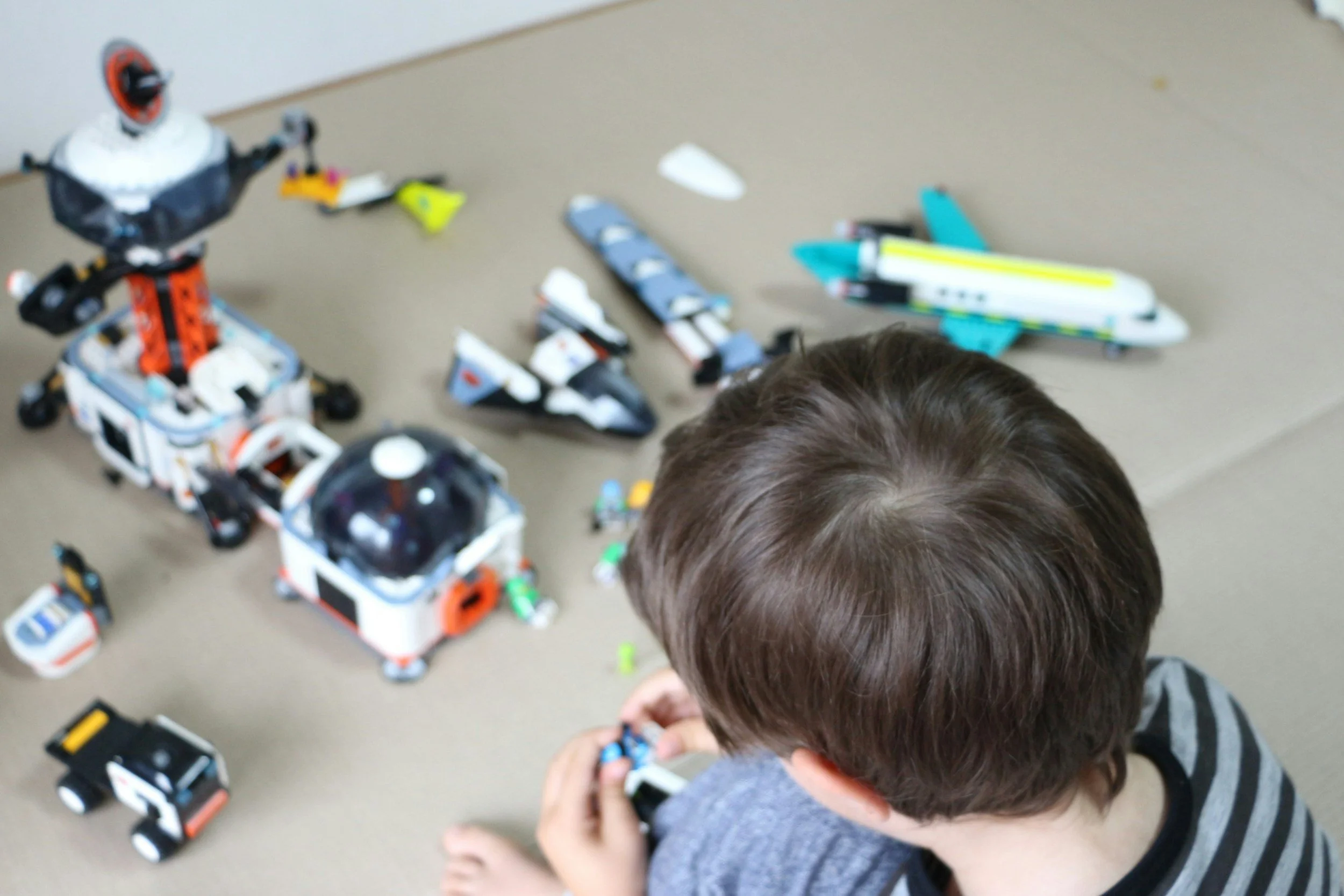
Legos and Engineers

What We Offer
At Beehive LEGO® Academy, children do more than build—they design, experiment, problem-solve, and create. Through hands-on LEGO® challenges and projects, students develop engineering and math concepts while strengthening executive functioning, visual-spatial reasoning, fine-motor skills, language, teamwork, creativity, and perseverance. Children are grouped by developmental and skill level, progressing from early building and following directions to advanced engineering, design, and collaborative problem-solving. At Beehive, LEGO® is the teaching tool—the skills children develop are the goal.
-
🐝 Level 1 — Little Builders
Preschool / Pre-K | Ages approximately 3–5
I would make this much more developmental than a traditional LEGO class. DUPLO and larger LEGO pieces could be used initially.
Children could work on fine-motor strength, visual-spatial skills, imitation, matching, sorting, counting, colors, shapes, following directions, requesting, sharing and cooperative play.
Examples: “Build a tower with five blocks,” “Copy my structure,” “Make an AB color pattern,” or build a house together.
-
🐝 Level 2 — Junior Builders
Kindergarten–Grade 1 | Ages approximately 5–7
Now LEGO becomes a tool for early STEM + academic learning.
Children begin following multi-step building directions and completing challenges such as:
Can you build a bridge that holds 10 blocks?
They work on planning, sequencing, measurement, counting, comparing, beginning engineering concepts, language, explaining their work and cooperating with another child.
-
🐝 Level 2 — Junior Builders
Kindergarten–Grade 1 | Ages approximately 5–7
Now LEGO becomes a tool for early STEM + academic learning.
Children begin following multi-step building directions and completing challenges such as:
Can you build a bridge that holds 10 blocks?
They work on planning, sequencing, measurement, counting, comparing, beginning engineering concepts, language, explaining their work and cooperating with another child.
-
🐝 Level 3 — LEGO Engineers
Grades 2–4 | Ages approximately 7–10
This is where I would make the program much more challenge-based rather than simply having children assemble LEGO kits.
For example:
Today's Challenge: Build the Tallest Free-Standing Tower
Children would plan → build → test → identify the problem → modify → test again → explain what they learned.
You can incorporate simple machines, bridges, towers, vehicles, ramps, gears, architecture and engineering challenges.